The Arabian Oryx: A Conservation Success Story
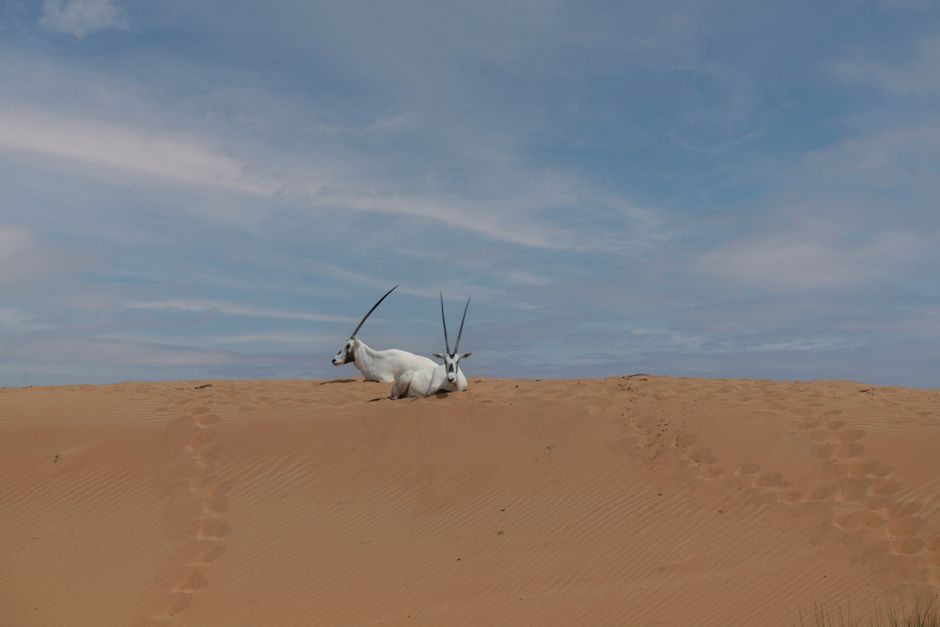
The Arabian oryx, a striking antelope adapted to the arid landscapes of the Arabian Peninsula, once teetered on the brink of extinction. By the early 1970s, hunting pressure and habitat loss had driven wild populations to negligible levels, with the last wild individual believed to have been shot in 1972. Yet, the species’ story did not end there. Through coordinated conservation efforts, including captive breeding and reintroduction into protected reserves, the Arabian oryx has made a remarkable recovery. This article explores the key steps and methods involved in that process, offering a neutral overview of the strategies that contributed to the species’ resurgence.
The narrative of the Arabian oryx is often cited as a testament to what can be achieved when organizations, governments, and local communities collaborate. However, it is essential to approach this narrative with a nuanced perspective, acknowledging that conservation outcomes are influenced by numerous factors, including political stability, funding, and ecological dynamics. The goal here is not to celebrate a guaranteed success, but to understand the methodologies and frameworks that were implemented, and the contextual conditions that shaped their effectiveness.
Conservation is not a linear path; it requires continuous adaptation and cooperation.
Historical Decline and Early Conservation Actions
The Arabian oryx’s decline was primarily driven by overhunting for its meat, hide, and horns, as well as the increasing encroachment of human activities into its natural habitat. As motorized hunting became more accessible in the mid-20th century, the oryx’s vulnerability escalated, and its populations dwindled rapidly. By the 1960s, it became apparent that the species would not survive without intervention. In response, several captive breeding programs were initiated, most notably the ‘World Herd’ established in Phoenix, Arizona, in 1963, which was founded on a small number of wild-caught animals. This herd was later used as a genetic reservoir for reintroduction efforts.
The initial focus of conservationists was on securing a viable captive population. Breeding protocols were developed based on observations of the oryx’s social behavior, reproductive biology, and dietary requirements. Captive environments were designed to mimic the natural desert conditions, with careful attention to temperature, shade, and nutrition. These early efforts were experimental, and researchers continuously refined their methods based on reproductive success rates and health indicators. The data gathered from these captive populations later proved invaluable in guiding reintroduction strategies.
Reintroduction to Protected Reserves
The first major reintroduction took place in 1982 in Oman, at the Arabian Oryx Sanctuary, a protected area that was established specifically to provide a safe haven for the species. This release involved animals from the World Herd and other captive facilities. The selection of the release site was critical: it needed to offer suitable habitat, adequate food sources, and low levels of poaching. In Oman, the sanctuary was chosen for its historical oryx range and its relative isolation. However, early releases were not without challenges. The oryx had to adapt to foraging in the wild, avoiding predators, and navigating the unpredictable climate. To facilitate adaptation, the animals were kept in temporary enclosures within the sanctuary for a period before being fully released, a practice known as soft release.
Similar reintroduction efforts were later conducted in other countries, including Saudi Arabia, Jordan, and the United Arab Emirates. Each location required site-specific assessments and adjustments. For instance, in Saudi Arabia, the Mahazat as-Sayd reserve was fenced to prevent human intrusion and to manage grazing. In Jordan, the Wadi Rum area offered a more rugged terrain, but also posed challenges in terms of fodder availability. Conservationists had to balance the oryx’s needs with the ecological capacity of each reserve, often implementing supplementary feeding and water provisioning temporarily until the animals could sustain themselves.
Monitoring and Adaptive Management
Monitoring is a cornerstone of any reintroduction program. In the case of the Arabian oryx, individuals were fitted with radio collars to track their movements, survival, and reproductive patterns. This data allowed researchers to assess the success of the releases in real-time and to identify potential problems early. For example, if a particular area showed high mortality from predation, managers could take measures to mitigate that risk, such as adjusting release locations or implementing predator control strategies. Adaptive management, a process where decisions are continuously updated based on monitoring feedback, was instrumental in addressing unforeseen issues.
Population health was monitored through regular health checks and genetic analyses. Maintaining genetic diversity in reintroduced populations is a long-term challenge, as small numbers can lead to inbreeding depression. To address this, conservationists have periodically introduced new individuals from captive stocks to augment the wild populations, a practice known as genetic supplementation. This practice aims to preserve the oryx’s adaptive genetic potential, but it also requires careful coordination and disease screening to prevent the introduction of pathogens into wild herds.
Community Engagement and Legal Protections
Successful conservation is rarely solely a scientific endeavor; it also requires the support of local communities and the establishment of robust legal frameworks. In many regions, local Bedouin communities have been engaged as partners in oryx conservation. Their traditional knowledge of the desert ecosystem and animal behavior provides valuable insights, and their participation in monitoring and protection efforts fosters a sense of stewardship. In Oman, for example, local rangers were trained to track and monitor oryx herds, creating employment opportunities and aligning conservation goals with community interests.
Legally, the Arabian oryx has been protected under national and international laws. In 1975, it was listed as endangered under the U.S. Endangered Species Act, which regulated the trade of oryx and their products. Internationally, the Convention on International Trade in Endangered Species of Wild Fauna and Flora (CITES) includes the Arabian oryx in Appendix I, providing restrictions on the international movement of the species. These legal protections have been crucial in curbing illegal hunting and trade, although enforcement remains a challenge in certain areas. Conservation initiatives have also worked with governments to designate protected areas, which are essential for safeguarding critical habitats.
Challenges and Future Outlook
Despite the celebrated successes, the Arabian oryx’s recovery is not without its ongoing challenges. Habitat loss continues due to urban expansion and overgrazing, and climate change poses new threats by altering the desert environments on which the oryx depends. Droughts, in particular, can reduce the availability of food and water, potentially leading to population declines. Furthermore, funding for conservation programs is often unstable, and political instability in the region can disrupt management efforts. As a result, the future of the Arabian oryx remains contingent on continuous conservation action and international cooperation.
Conservationists are currently exploring the use of advanced technologies, such as GPS tracking and remote sensing, to enhance monitoring efficiency. They are also involved in genetic research to better understand the oryx’s adaptive traits and to manage breeding programs more effectively. Public awareness campaigns play a role in fostering positive attitudes toward wildlife, which in turn supports conservation policies. The Arabian oryx story demonstrates that with sustained scientific effort and community support, a species can be pulled back from the brink of extinction, but the journey is ongoing and requires vigilance.