Desert Owls: Nocturnal Hunters Adapted to Extreme Heat
Desert owls are a fascinating group of birds that have evolved to thrive in some of the most challenging environments on Earth. Their ability to hunt at night, when temperatures drop and prey becomes active, relies on a suite of specialized adaptations. This article explores the key features that enable these raptors to survive and hunt in extreme heat and arid landscapes. By examining their physical, sensory, and behavioral traits, we gain insight into the intricate balance between predator and environment.
Silent flight is one of the most iconic adaptations of owls, and it is especially crucial in the open, quiet expanses of deserts where prey can easily detect the sound of approaching wings. The structure of an owl’s feathers, including serrated edges and a soft, velvety texture, allows air to pass over the wings with minimal turbulence, reducing noise significantly. This evolutionary design enables desert owls to approach prey without alerting them, increasing the likelihood of a successful hunt. In the context of deserts, where sound travels far and distances between predator and prey are often large, silent flight provides a distinct advantage.
Exceptional night vision is another cornerstone of the desert owl’s hunting arsenal. Owls have large eyes relative to their head size, which allow for a greater number of rod cells—the photoreceptors responsible for low-light vision. Additionally, their eyes are tube-shaped, providing a larger lens and retina, which enhance light gathering. This means that even on moonless nights, desert owls can detect the faintest movements of small rodents and insects. Furthermore, their ability to rotate their heads up to 270 degrees compensates for the fixed position of their eyes, offering a wide field of view. Such visual adaptations are essential in the dark, arid nights where prey is scarce and every opportunity must be capitalized upon.
Heat tolerance is a less obvious but equally vital adaptation for desert owls. Unlike many animals that avoid the heat of the day, owls often roost in crevices or burrows during daylight hours to escape the scorching sun. However, they also exhibit physiological mechanisms to cope with high temperatures. For instance, they may use gular fluttering—a rapid vibration of the throat—to enhance evaporative cooling. Additionally, their body feathers provide insulation that minimizes heat absorption during the day and conserves body heat during the cool desert nights. This dual capability allows them to maintain a stable internal temperature despite the extreme fluctuations between day and night.
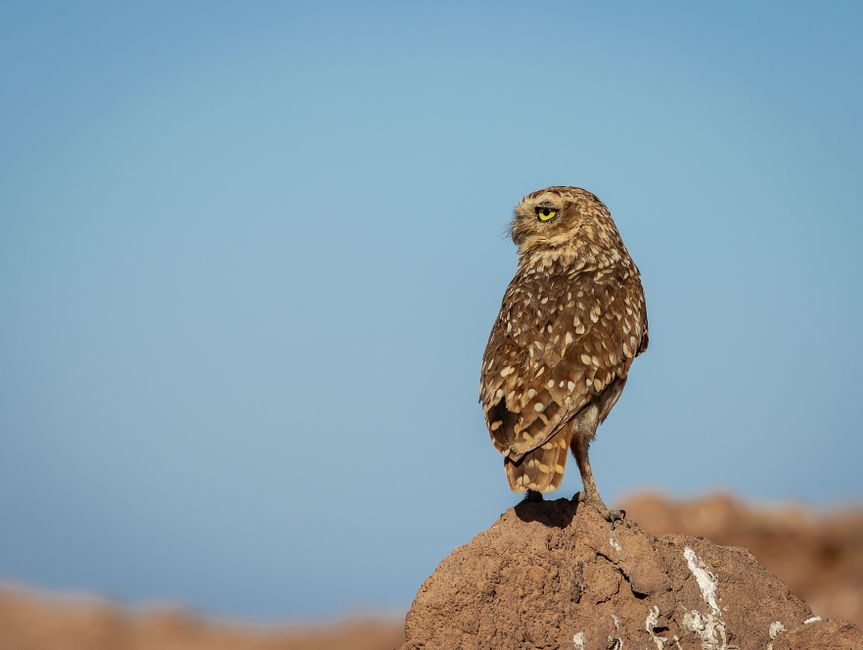
Behavioral strategies also play a significant role in the survival of desert owls. Many species are strictly nocturnal, emerging only after dusk to hunt, which sidesteps the most intense heat. They often hunt from elevated perches, scanning the ground for prey, and then swoop down with precision. Some species, like the burrowing owl, are even active during twilight hours, adapting their activity patterns to local conditions. These behaviors are not fixed but are flexible, allowing owls to adjust to variations in temperature, prey availability, and moon phase. Understanding these strategies provides a clearer picture of how desert owls are not just passive survivors but active participants in their ecosystem.
The interplay between these adaptations illustrates a remarkable example of evolutionary specialization. Silent flight, night vision, and heat tolerance are not isolated traits but are integrated to form a cohesive hunting strategy. For instance, an owl’s excellent vision is most useful when combined with silent approach, as it allows for a surprise attack on unsuspecting prey. Similarly, heat tolerance enables owls to use the cooler night hours effectively, while also allowing them to withstand brief periods of heat stress if necessary. This holistic view reveals the complexity of their biology and the fine-tuning that has occurred over millennia.
In addition to their physical traits, desert owls also exhibit a range of ecological roles. They help control rodent and insect populations, which can otherwise become pests in agricultural areas near desert regions. Their presence is an indicator of a healthy ecosystem, as they are often top predators in their food web. Conservation efforts for desert owls involve protecting their habitats from development and climate change, which threaten the delicate balance of arid environments. By understanding their adaptations, researchers and conservationists can better appreciate the specific needs of these owls and work towards preserving the natural landscapes they depend on.
In conclusion, desert owls are masterpieces of adaptation, seamlessly blending morphological, sensory, and behavioral traits to conquer the challenges of extreme heat and darkness. Their silent flight, exceptional night vision, and heat tolerance are not just individual features but components of a sophisticated hunting system. By studying these nocturnal hunters, we not only learn about the wonders of evolution but also gain insights into the fragile ecosystems they inhabit. As environmental pressures increase, the survival of desert owls serves as a reminder of the interconnectedness of species and their environments, highlighting the importance of conservation efforts to protect these remarkable birds and their arid homes.